
When most investors post an acquisition rep job, the first line of the requirements says something like “real estate experience required.”
It feels safe. Someone who already knows the business should ramp faster, right?
In my experience, it’s usually the opposite.
Real estate experience comes with baggage
People who come from real estate usually show up with habits we have to break before they’re any good to you.
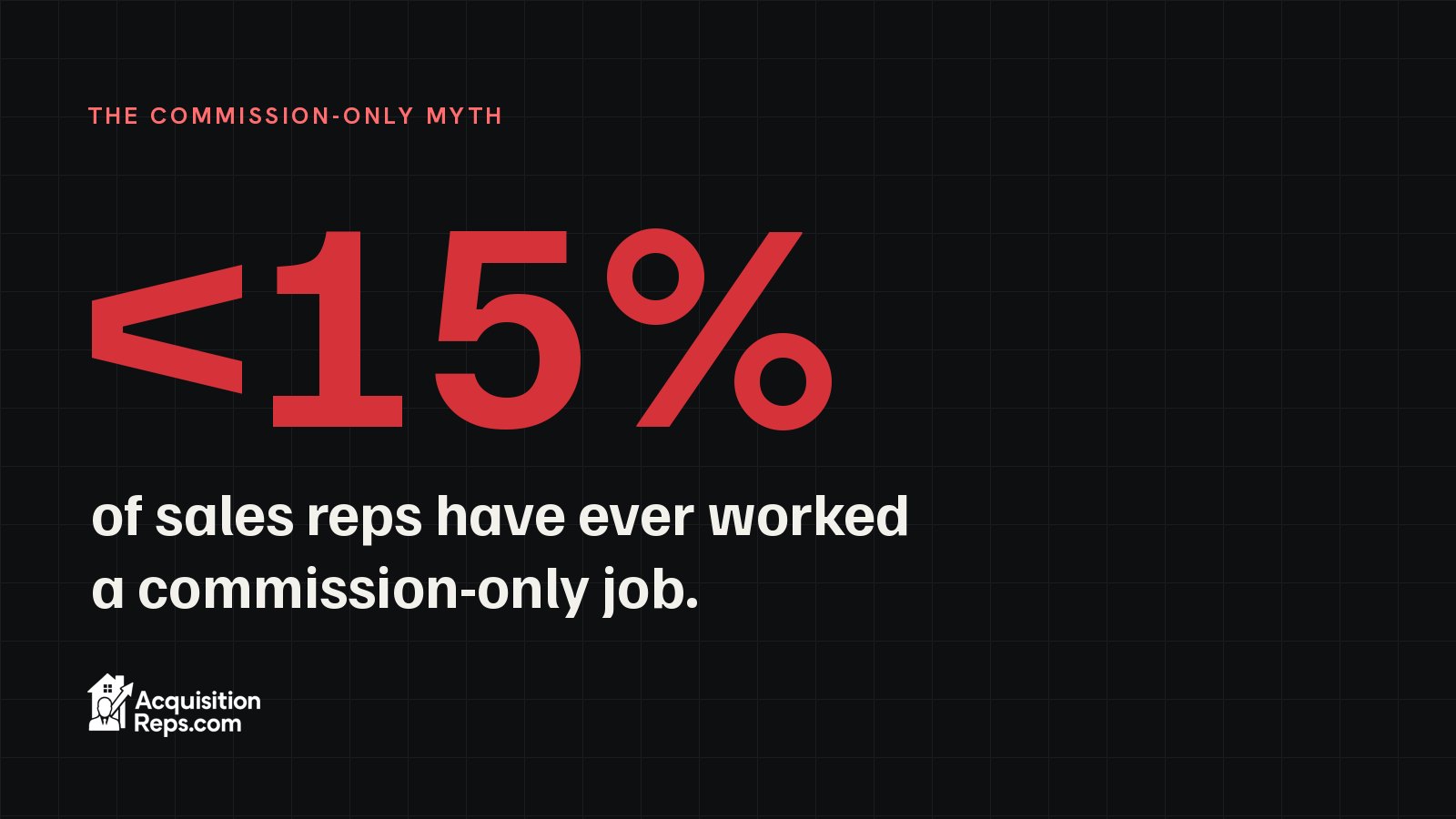
They’ve been trained to “list and wait.” They’ve learned to talk about comps instead of listening to the seller. They’ve picked up shortcuts from the last team that never held them accountable. And a lot of them have only ever worked commission-only, so they’re used to cherry-picking the easy deals and ignoring the rest.
You can teach someone the real estate side of this job. Contracts, comps, and how a deal closes can be learned in a few weeks.
What you can’t easily teach is how to sell.
The best closer I ever worked with
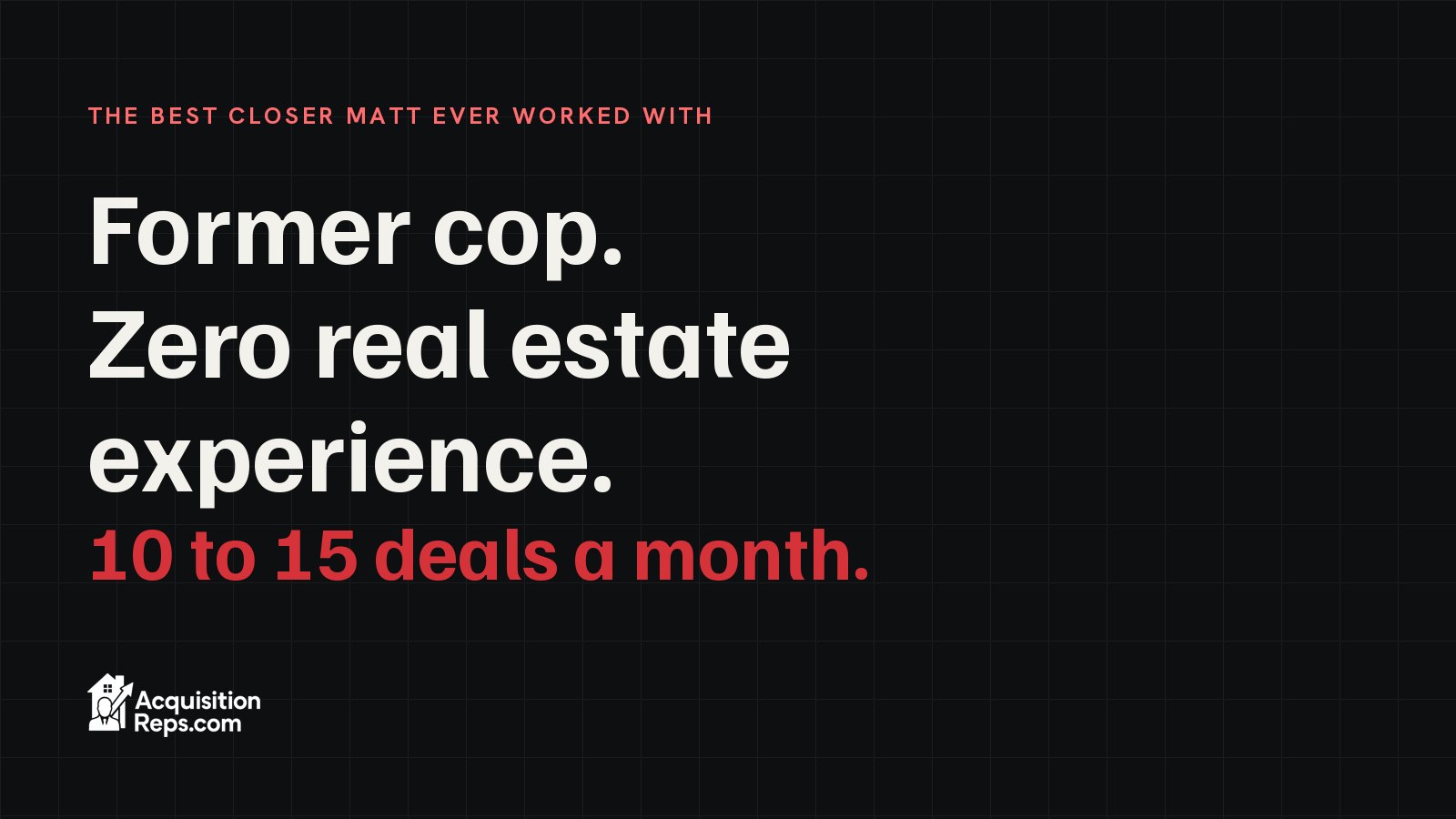
The best acquisition closer I ever worked with was a former cop. Zero real estate experience. None.
Five years on the force taught him things no real estate course ever could. How to build rapport fast with someone who doesn’t trust you. How to stay calm when a conversation gets tense. How to be assertive and polite at the same time. And how to not take “no” as the final answer.
He wasn’t flashy. He was steady. He followed a routine, tracked his numbers, and hit his KPIs every single week.
He routinely closed 10 to 15 deals a month, working only 30 to 35 hours a week, and made $400,000 to $500,000 a year in commissions.
He didn’t need a real estate background. He needed a seller on the phone and a process to follow.
Where the best closers actually come from
When we recruit for an acquisition seat, we go after people who already sell for a living, just not houses. The best ones usually come from:
- High-ticket sales. People used to asking for a big number and holding it.
- In-home sales. Roofing, HVAC, solar, windows. They’re comfortable at a kitchen table with a homeowner who’s skeptical.
- Phone sales. People who can build trust fast without being in the room. That matters, because a lot of sellers won’t meet in person.
First responders and former military leaders are worth a look too. They’ve spent years talking to people in stressful moments and keeping their cool.
Most of these people aren’t looking at job boards. They’re employed and doing well. That’s why the best closers have to be found, not posted for.
Test the selling, not the resume
Salespeople interview well. That’s the problem.
A great interview tells you someone is good at interviews. It doesn’t tell you what happens when a seller says “I need to think about it.”
So we barely read resumes. Every finalist we put in front of a client has already been through behavioral and cognitive assessments, multiple interviews, and a mock seller call where we watch how they actually handle pushback. You see how they sell before they ever touch one of your real leads.
What to do with your next job post
If you’re hiring on your own, try three things:
- Drop “real estate experience required.” Replace it with the sales skills you actually need: rapport, follow-up, and holding a number.
- Go where the closers are. Reach out to people in high-ticket, in-home, and phone sales instead of waiting for applicants.
- Make them sell to you. Run a mock seller call before you make an offer. It will tell you more than any interview question.
If you want help building that process, or you’d rather we run it for you, start with an Acquisition Seat Review.
Commission figures describe one rep's results. Results vary. See our Earnings Disclaimer.