
For years I ran my acquisition seat on commission-only. That’s what I’d been taught. Only pay for results, keep the rep hungry, keep your costs down.
On paper, it made sense.
In real life, it gave me unpredictability. Missed follow-ups. Reps who disappeared the minute things got hard. And me, back on the phone with sellers at 8:30 at night.
Here’s what I learned the hard way.
You’ve already filtered out most of the people you want
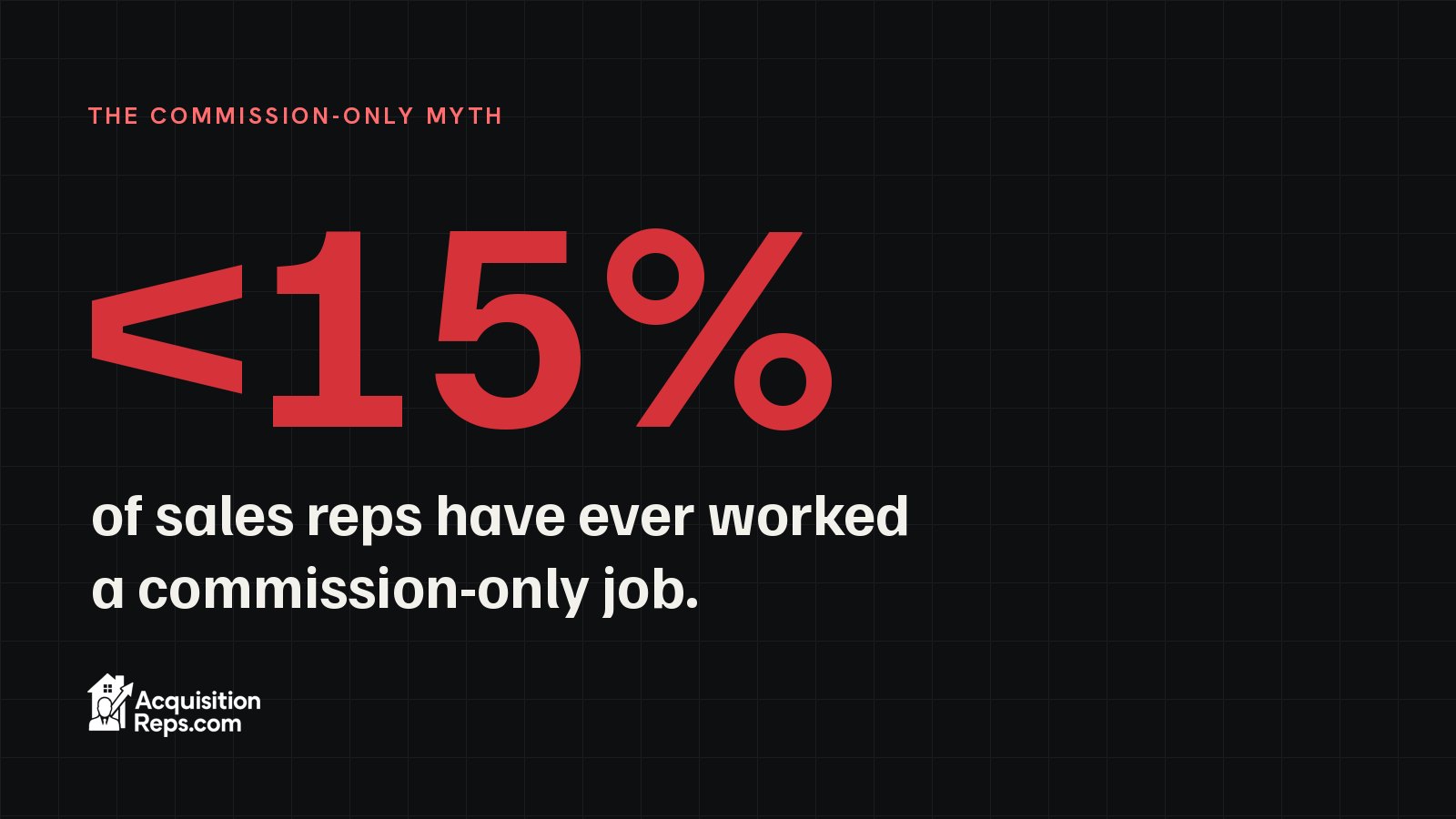
Fewer than 15% of sales reps have ever worked a commission-only job.
So the moment you post a 1099, commission-only role, you’ve filtered out 85% of the people you actually want to hire. The experienced closers with a mortgage and a family aren’t applying. They have options, and none of those options involve going months without a paycheck.
Who’s left? Mostly people who can’t get a base salary somewhere else.
Base pay doesn’t make reps soft
The biggest fear I hear from investors is that paying a base will make their rep lazy.
What I’ve seen is the opposite.
A base salary gives a new rep room to ramp up. It keeps them in the seat through the learning curve, long enough to take feedback and actually use it. They’re not panicking about this week’s paycheck, so they follow the process instead of chasing whatever deal looks easiest today.
That’s also how you stop cherry-picking. A commission-only rep makes offers to the sellers who are already halfway to yes and lets the rest go cold. A rep on a real base can afford to work every lead you paid for.
And when reps see you’re willing to truly invest in them, W-2 reps are far more loyal. They’ll go to the wall for you.
What happened when one client switched
Mitch runs a real estate investing business in Birmingham, Alabama. He had two closers working as 1099 contractors on commission-only. They weren’t great, but they were getting by.
Then both of them quit in the same week. No warning.
Instead of posting another commission-only job, he switched to a W-2 role with a real base and put a proper hiring process behind it. Within a few weeks he had seven screened finalists to choose from. He hired two.
Both were locking up contracts in their first month.
Base pay plus a real plan
A base salary on its own isn’t magic. It works when it’s part of a comp plan an A-player can see themselves in:
- A real base that covers the ramp-up period.
- Commission that rewards results, so top performers can earn $100K+ a year.
- Clear KPIs so everyone knows what “on track” looks like.
- A manager who runs the rep day to day: meetings, call reviews, and accountability.
Elite A-players won’t work for B and C level companies. A competitive comp plan is one of the first things they look at to figure out which one you are.
Hire for phone and in-person
One more thing that changed for me. I used to only trust reps who closed in person, at the kitchen table.
But sellers cancel. Plans change. If your rep can’t pivot and close over the phone when a seller says “I can’t meet this week,” you’ll lose the deal. The best reps can do both, and the best ones are worth paying for.
The bottom line
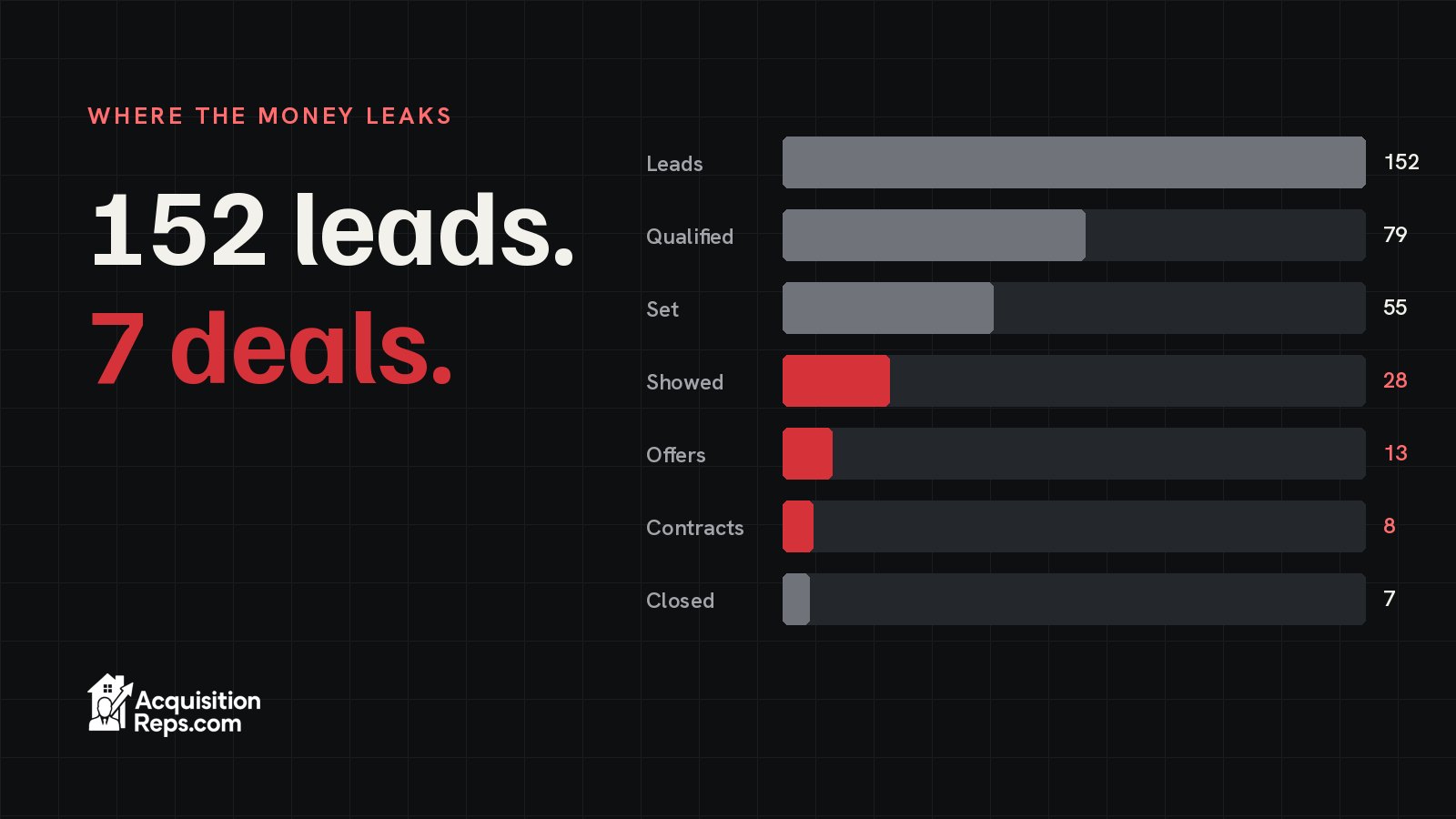
Commission-only feels cheap. It’s not. You pay for it in turnover, in leads that go cold, and in your own time when you end up back in the seat.
If you want help building a comp plan that attracts the reps you actually want, that’s one of the first things we look at on an Acquisition Seat Review.
Individual client results. Results vary. See our Earnings Disclaimer.